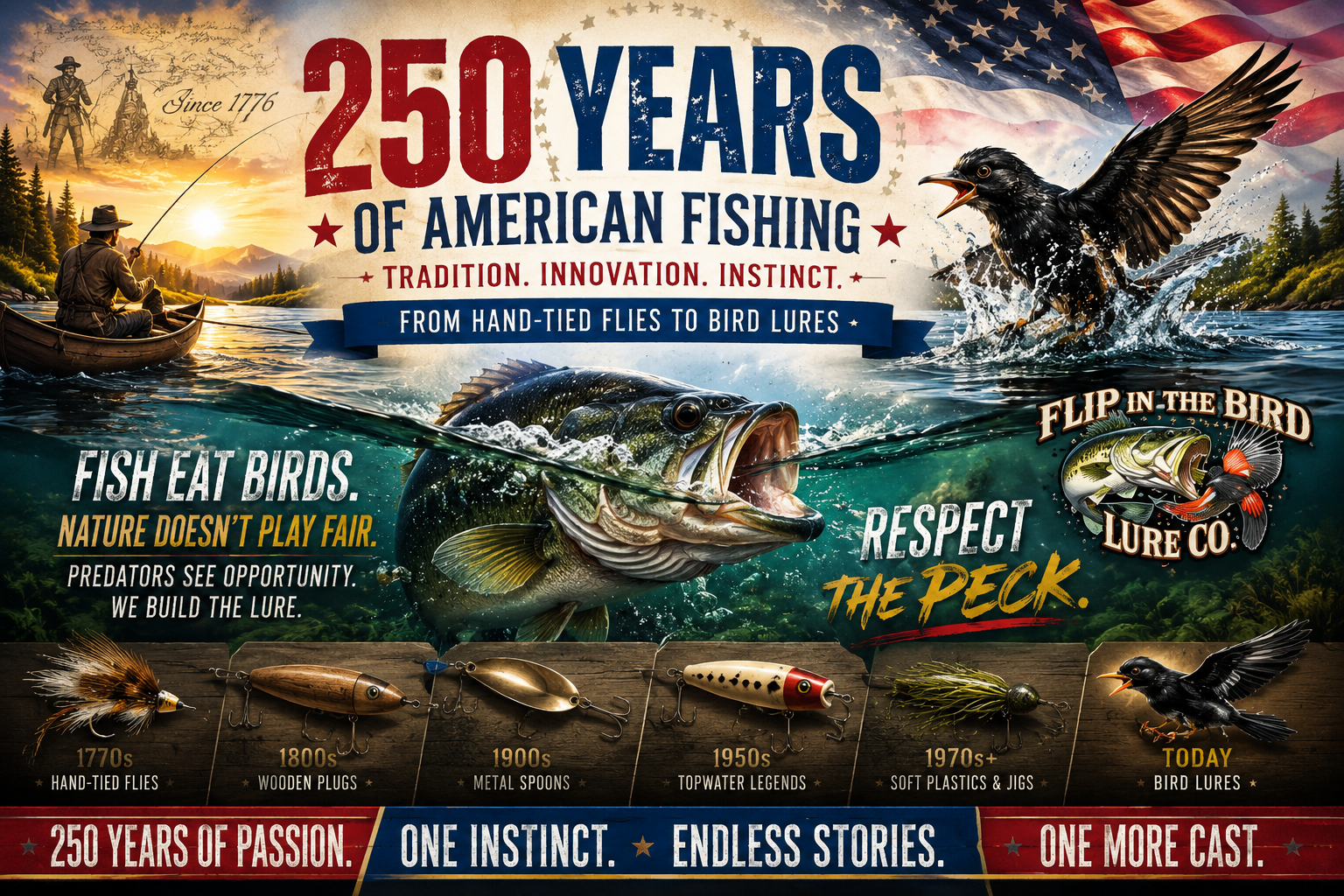
For 250 years, fishing has been woven into the American story.
Long before high-speed bass boats, sonar, and tournament trails, America’s waters fed families, inspired explorers, and brought generations together. Fishing was survival, recreation, and tradition all at once.
In the earliest days of our country, anglers used simple tools—hand-carved plugs, natural baits, feathers, and primitive hooks. Rivers and lakes became gathering places where patience, skill, and observation mattered more than technology.
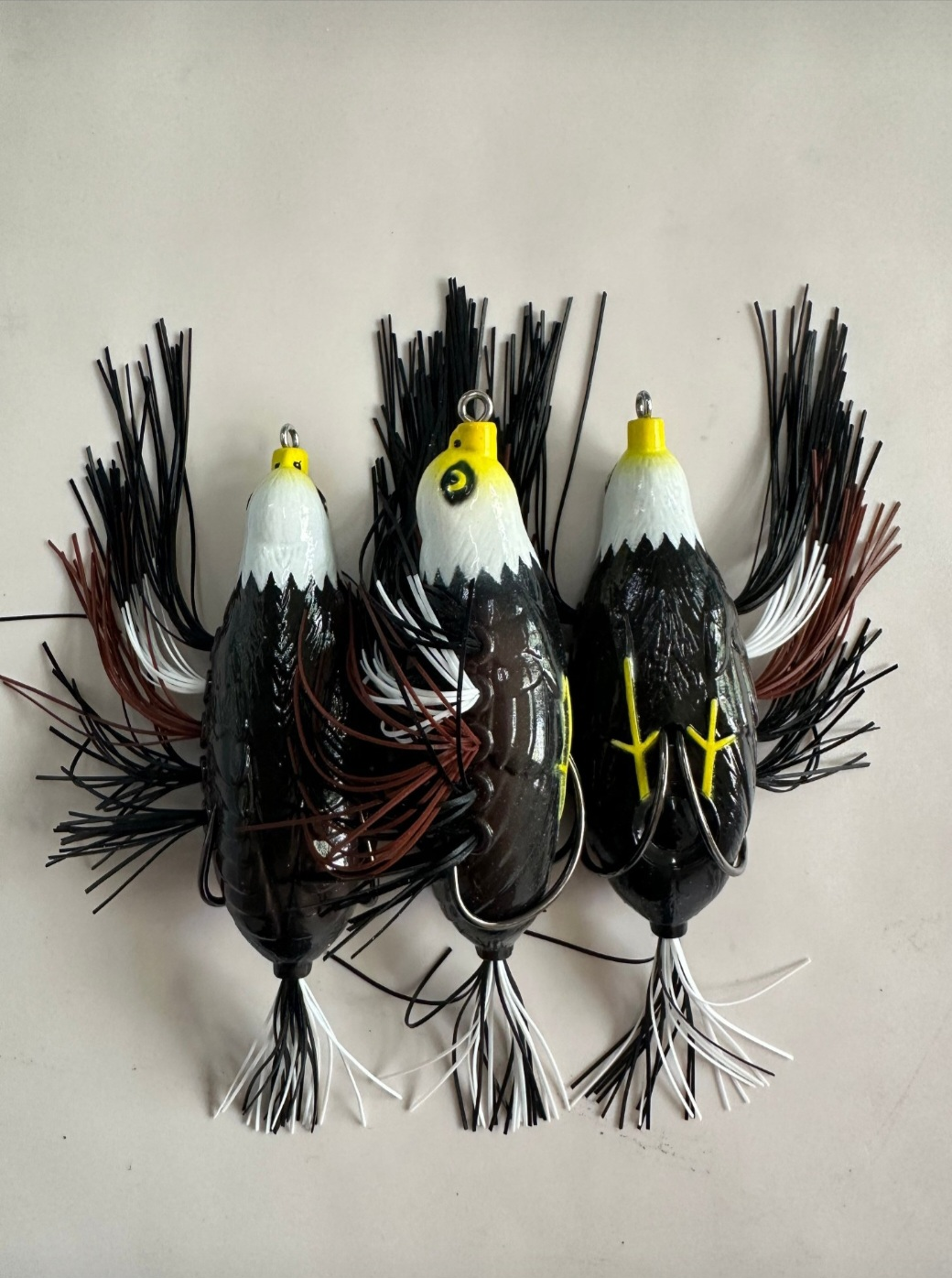
The Limited Edition Bald Eagle first 750 Run is already selling out quick. Click above.
As America grew, so did fishing innovation.
The late 1800s and early 1900s brought wooden plugs, metal spoons, and the birth of tackle craftsmanship. Small workshops and garage inventors began shaping ideas into tools that could fool nature’s greatest predators.
Then came bass fishing’s golden age.
Plastic worms, spinnerbaits, frogs, swimbaits, and topwater creations transformed the sport. Every decade produced new ideas—but the most successful lures always shared one thing in common:
They imitated life.
That principle remains true today.
Predators do not look for perfection. They look for vulnerability.
A struggling baitfish.
A wounded frog.
A fleeing rodent.
And yes—sometimes a bird.
Many anglers forget that fish are opportunistic predators. Bass, pike, and other freshwater predators are known to attack hatchling birds, swallows, ducklings, and distressed surface animals whenever the opportunity presents itself. Nature is not always gentle, and predators rarely refuse an easy meal.
That reality inspired generations of creative lure builders willing to think beyond traditional bait categories.
The story of American fishing has never been about copying what already exists.
It has always been about seeing what others overlook.
As we celebrate America’s 250th birthday, we also celebrate 250 years of anglers, inventors, and outdoorsmen who pushed fishing forward one idea at a time.
From handmade cedar plugs to hollow-bodied bird lures, innovation remains part of the American spirit.
The tackle may evolve.
But the thrill of watching a predator explode on the surface remains timeless.
Respect the Peck.