The Bird Lure That Wouldn’t Go Away From Breakthrough to Setback—and Back Again
The idea of fishing a bird on the surface has always lived on the edge of the sport.
It’s not new. Bass have been known to eat birds for as long as people have watched them. But for years, the lures built around that idea never quite caught up to the behavior they were trying to imitate.
That changed in 2011.
The First Real Step Forward
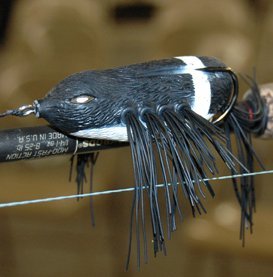
In 2011, Flip In The Bird Lure Co. introduced something the category had never really seen before—a hollow-bodied bird lure designed to be fished like a frog, but built around a completely different profile.
It wasn’t just about appearance.
The hollow body allowed the lure to:
collapse on the strike
improve hook-up ratios
move naturally across the surface
and be fished in heavy cover with confidence
At the time, that combination didn’t exist in a bird-style lure.
The launch included an impressive lineup of nine different color patterns, giving anglers options that matched real-world bird species and conditions. For the first time, the concept wasn’t just interesting—it was usable.
A Category Still Finding Its Place
Even with a functional design, the bird lure space was still developing.
The category itself hadn’t fully caught on, and like many new ideas in fishing, it faced resistance. After a residual deal tied to the early growth of the product fell apart, momentum slowed.
Competitors moved in, and without strong support behind the original concept, the lure risked being pushed aside.
For a time, it looked like the idea might fade before it had the chance to fully take hold.
The Long Gap
What followed wasn’t a sudden rise—it was a quiet stretch.
The concept remained valid. The behavior was still there. But the category lacked direction.
Without continued development and refinement, bird-style lures stayed on the fringe—known by some, overlooked by most.
A Return to the Original Idea
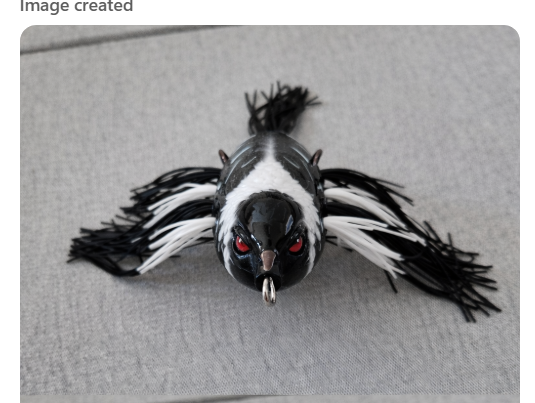
New Bird Lure For Bass Fishing. White Breasted Tree Swallow.
In 2025, that changed.
Working from the foundation of the original design, Sam Kennedy and his team revisited the bird lure concept with a focus on improving what mattered most on the water.
The result was a new, larger version of the original lure—refined in profile, balance, and overall performance.
It wasn’t a reinvention.
It was a continuation.
Building on What Worked
The updated design kept the core elements that made the original effective:
a hollow body for better hook-ups
a surface profile that stands apart from traditional lures
and the ability to be fished in the same environments where topwater strikes are most aggressive
But it pushed those ideas further, improving consistency and making the lure more adaptable to different conditions.