How the Bird Pattern Works Across Different FisheriesWhy Location Changes Everything
One of the biggest mistakes anglers make is assuming fish behave the same everywhere.
They don’t.
Water clarity changes things. Pressure changes things. Forage changes everything.
And when it comes to bird patterns, what works in one part of the country can look completely different somewhere else.
The behavior is real—but how it shows up depends on where you are.
The Core Pattern
At its simplest, the bird pattern is about opportunity.
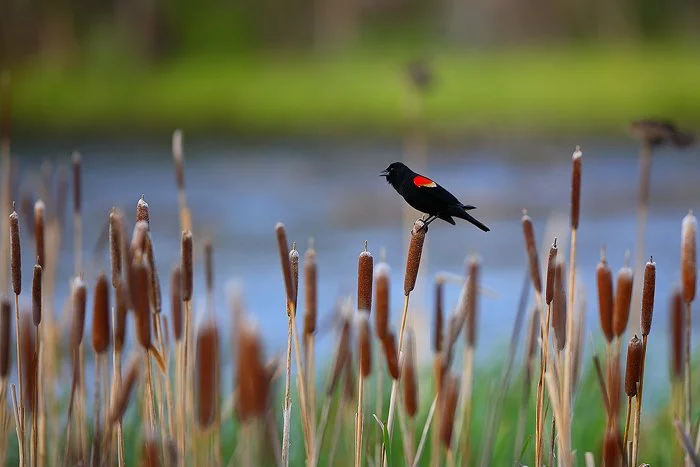
A bird on the water represents something out of place. It’s not built for that environment, and when it ends up there—especially near cover—it often looks vulnerable.
That’s what bass key on.
It’s not that birds are a primary food source. It’s that they occasionally present a high-value, easy target. And when that moment shows up, predators are wired to take advantage of it.
That part doesn’t change.
What does change is which birds, where it happens, and how often bass see it.
🟩 Midwest Fisheries: Structure and Nesting Activity
Across much of the Midwest—lakes, reservoirs, and farm ponds—the bird pattern often ties closely to shoreline cover and nesting behavior.
Common species include:
Red-winged blackbirds
Swallows
Grackles
Small waterfowl
These birds tend to build nests in:
reeds
cattails
low-hanging brush
During spring and early summer, there’s a lot of activity in these areas. Young birds move around the edges, and occasionally something ends up on the surface.
Bass already positioned along that cover don’t have to move far.
In these fisheries, the bird pattern is usually tight to structure. It’s less about open water and more about edges—places where something could realistically fall in or struggle near the bank.
🟦 Western Fisheries: Clear Water and Visual Tracking
Out west, especially in clearer lakes and reservoirs, the dynamic shifts.
You’re often dealing with:
clearer water
more visibility
more cautious fish
Bird species can include:
swallows
small shore birds
grebes in some areas
occasional juvenile waterfowl
Because the water is clearer, bass can track movement from farther away. That means the presentation matters more.
In these fisheries, the bird pattern tends to be:
more visual
more subtle
more dependent on realism and movement
Fish may follow longer before committing. When they do, it’s usually because something about the movement convinces them it’s worth the effort.
This is where the difference between controlled and slightly imperfect action becomes more noticeable.
🟨 Eastern Fisheries: Pressure and Opportunistic Feeding
In many Eastern fisheries, especially heavily pressured lakes and ponds, fish see a lot.
They see frogs. They see baitfish. They see the same patterns over and over again.
That’s where something different starts to stand out.
Common birds include:
sparrows
small shoreline birds
juvenile ducks in certain waters
mixed species around docks and overhangs
Here, the bird pattern often works because it’s unfamiliar.
It’s not something fish see every day, and that alone can be enough to get a reaction—especially when combined with the right conditions.
In these environments, the key is often timing and placement, not just presentation.
Calm water, low light, and areas with natural bird activity tend to bring the pattern to life.
What Stays the Same
No matter where you are, a few things don’t change.
Bass respond to:
vulnerability
irregular movement
opportunity
A bird on the surface checks those boxes in a way that most traditional lures don’t.
That’s why the pattern works across regions—even if it looks a little different in each one.
Reading Your Water
The biggest advantage an angler can have is awareness.
Look around.
Are birds active near the water?
Are there nesting areas along the bank?
Are you fishing calm conditions where something on the surface stands out?
Those small observations matter.
They’re often the difference between just casting… and actually understanding what’s happening.
Final Thought
The bird pattern isn’t locked to one lake, one region, or one type of fishery.
It’s a behavior.
And like most behaviors in fishing, it shows up differently depending on where you are.
The key is recognizing it—and adjusting to what your water is telling you.
👉 Learn More About Fishing the Bird
If you want to go deeper into how to fish it, tune it, and trigger those full commitment strikes: