Small Lakes & Blue-Green Algae: What Every Bass Angler Should Know
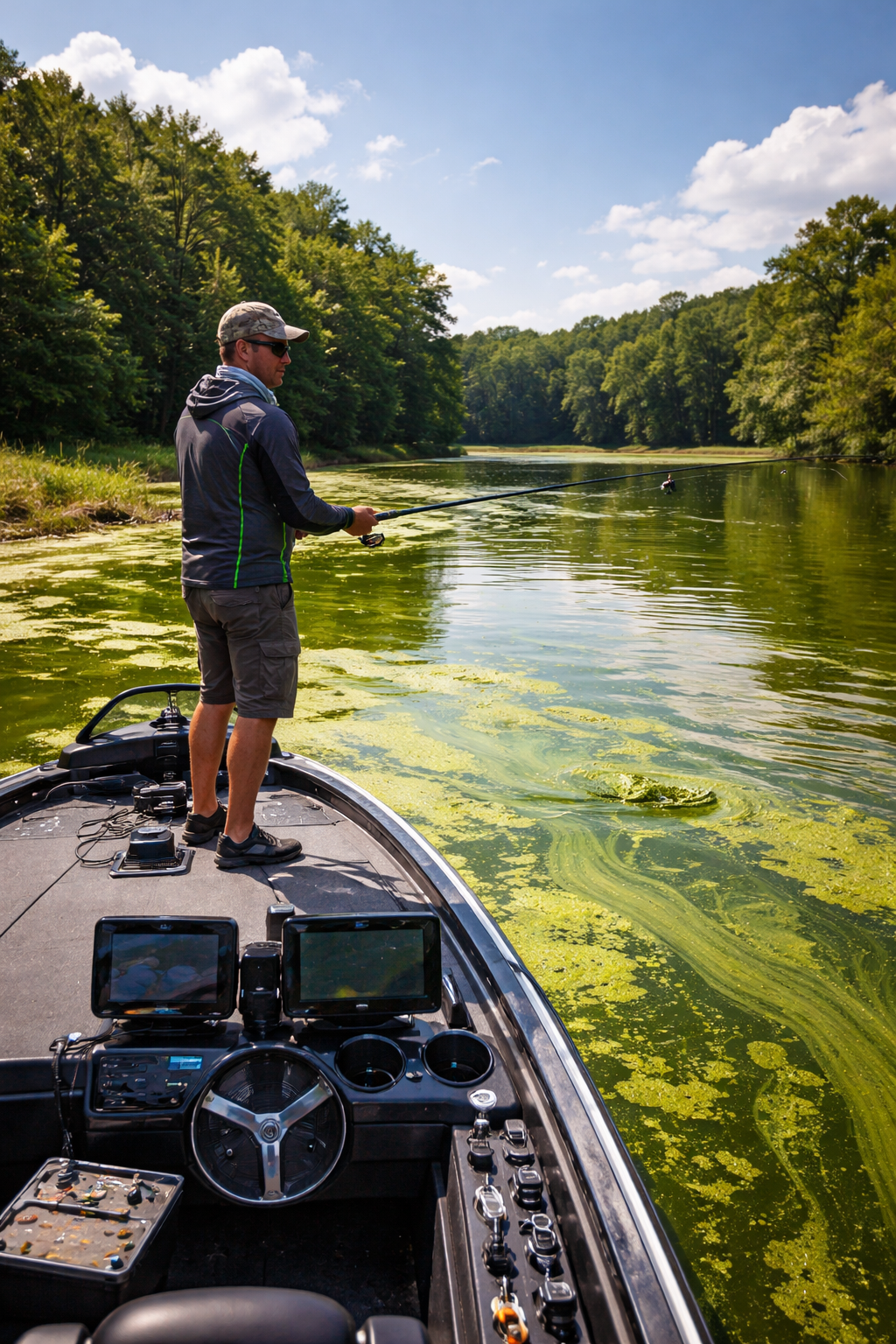
Fishing in Algae can be challenging but do not let it ruin your day.
For bass anglers, summer on a quiet little lake can feel like paradise — warm mornings, calm flats, and bass firing along lily pads. But over the last several seasons, a growing environmental challenge has become impossible to ignore: harmful algal blooms (HABs), often called blue-green algae. These blooms can change not only the look of a lake, but its ecology and its bass fishing too.
What Are Blue-Green Algae and Why They Matter
Blue-green algae are not actually plants — they’re cyanobacteria, microscopic organisms that live in lakes everywhere. Under the right conditions — warm water, lots of sunlight, and extra nutrients like nitrogen and phosphorus — these cyanobacteria reproduce rapidly, forming thick mats or discolored water that sometimes looks like paint floating on the surface.
In inland waters, these blooms are becoming more common. Some produce toxins that can harm wildlife, pets, and humans. In others, the biggest impact comes not from toxins but from dramatic swings in oxygen levels as the bloom grows and then collapses.
In parts of California, for instance, lakes such as Hensley and Eastman are monitored for HABs because they appear almost every warm season, and warnings are posted when conditions become risky.
How Algae Blooms Affect Bass & Fishing
1. Oxygen Fluctuations and Fish Behavior
Cyanobacteria blooms generate oxygen during the day through photosynthesis — but when they die off or are eaten by microbes, they can consume huge amounts of oxygen at night. This process, known as anoxia, can stress or even kill fish if oxygen dips low enough.
For bass, low oxygen means fish can become sluggish, seek deeper or moving water where oxygen is higher, or cluster in isolated pockets. Anglers may notice less action near weed edges or shallow flats that normally hold fish.
2. Water Clarity & Bass Feeding Ecology
Cloudy, turbid water full of algae changes the visual environment for both baitfish and bass. While there isn’t yet a huge body of recent bass-specific research, studies on other species show that dense algae can significantly reduce fish ability to see — affecting feeding success and hunting behavior.
Anglers consistently report that surface blooms can make bass behavior harder to predict — some days the fish lock on baitfish near cleaner breaks, other days they go silent until the bloom shifts or winds concentrate oxygenated water in certain bays.
3. Toxin Accumulation & Fish Consumption
Most small inland bloom events do not automatically make fish unsafe. Government health experts, such as those in Oregon, suggest limiting fish consumption from affected water bodies to moderate amounts, and removing fat, skin, and organs where some toxins could concentrate.
This is a precautionary guideline — documented cases of people becoming ill from eating bass caught during algae events are extremely rare — but for anglers who frequently catch and eat their fish, it’s wise to stay informed.
Angling Strategy Through the Bloom Season
Rather than throwing up your hands when you see blue-green algae, experienced locals adjust their approach:
Target Moving Water: Areas near inlets, springs, or currents often have better oxygen levels and clearer water.
Shift Tactics: When surface blooms dull your view, try deeper presentations like Carolina rigs or deep jigs.
Watch the Sky: Light breezes can push cleaner, oxygenated water into small coves — those wind lines can hold bass when algae blankets the main lake.
Each bloom is different, so being flexible and observant pays off.
Why This Is Happening More Often
Two broad drivers are increasing HAB frequency:
Climate warming — longer warm seasons and calm water favor blooms.
Nutrient overload — runoff from fields, lawns, and septic systems feeds cyanobacteria.
These blooms are now important enough that scientists and managers are creating new tools — including remote sensing and AI-based monitoring systems — to classify and predict where and when blooms will occur, especially in small inland lakes where recreation and fishing matter most.
In the End
Blue-green algae are part of the changing face of freshwater fishing. For bass anglers, they can mean tougher conditions, altered fish behavior, and new health considerations. But with smart tactics and local awareness, anglers can still find success — and help protect the waters they love.
Would you like a location-specific guide showing which nearby lakes are currently being monitored for blue-green algae risk? I can pull the latest advisory info for your region.